 01
01Start Here
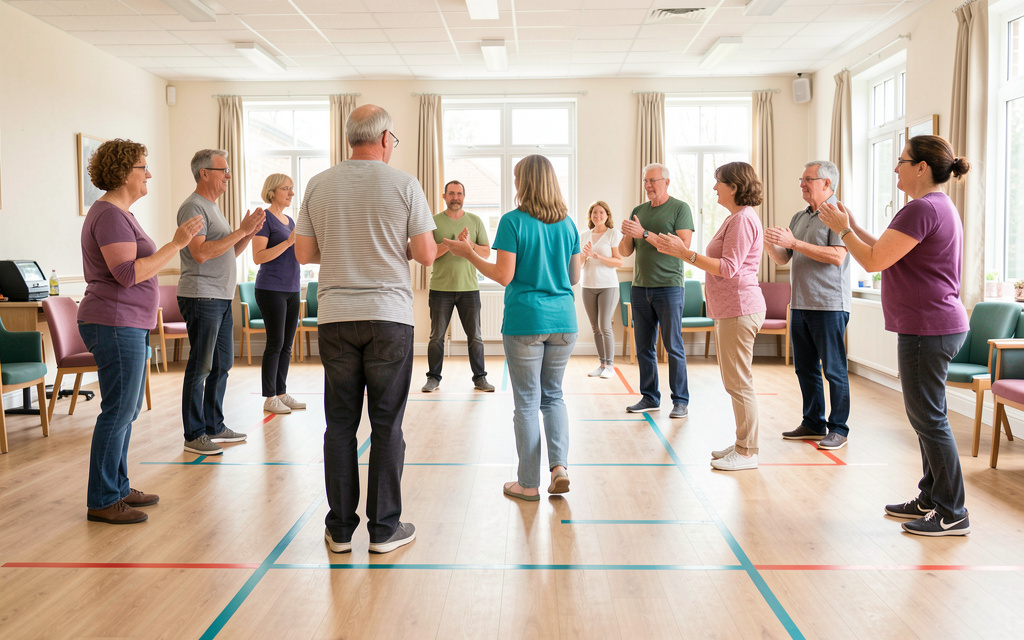
A patient route from the doorway to your first clean count.
FIRST COUNTS / BEGINNER DESK
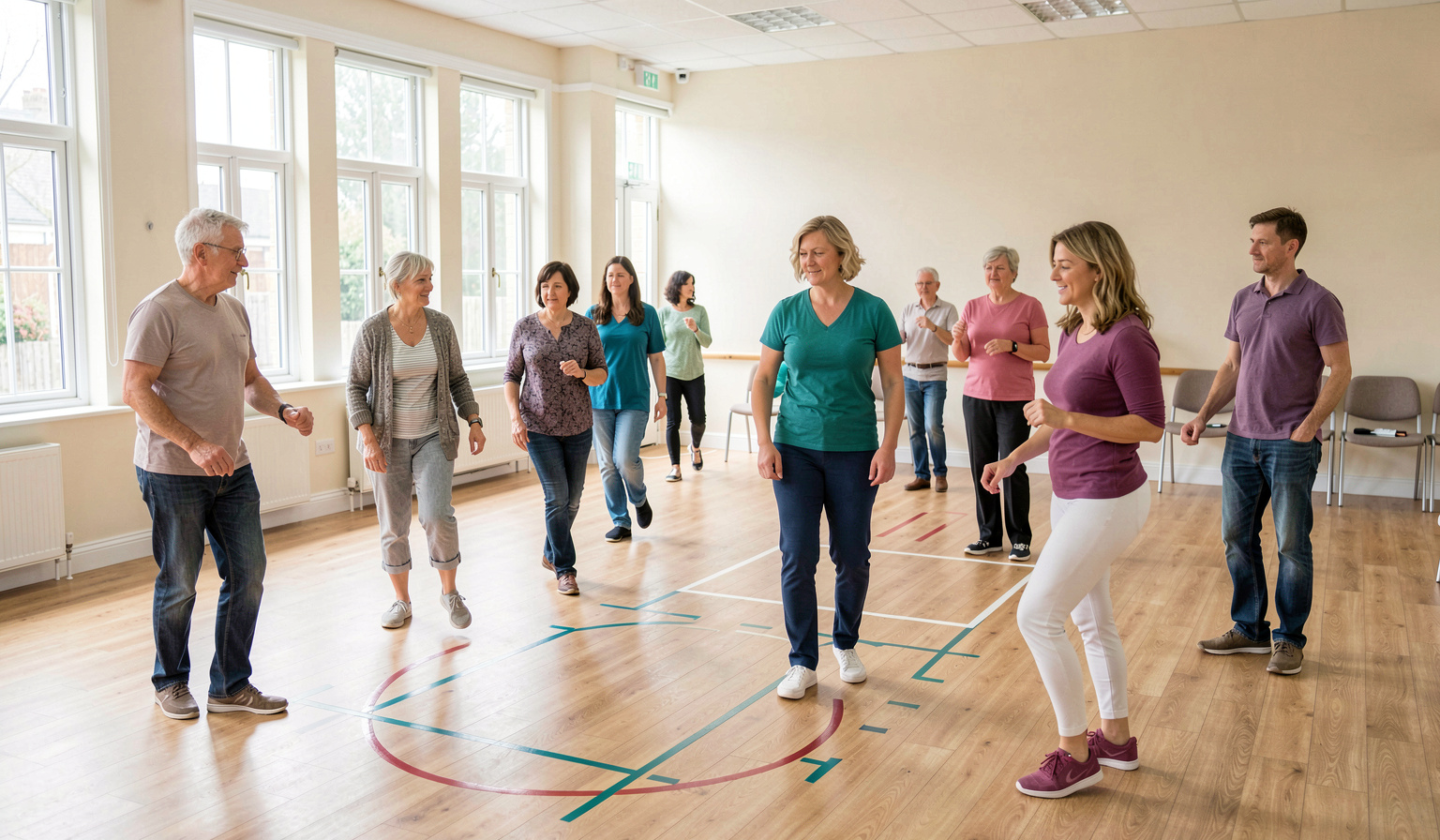
Clear calls, readable counts and a calmer first step into line dance.
Start with your first ten minutes →Choose your next mark
01A patient route from the doorway to your first clean count.
 02
02Translate spoken calls and step-sheet shorthand.
 03
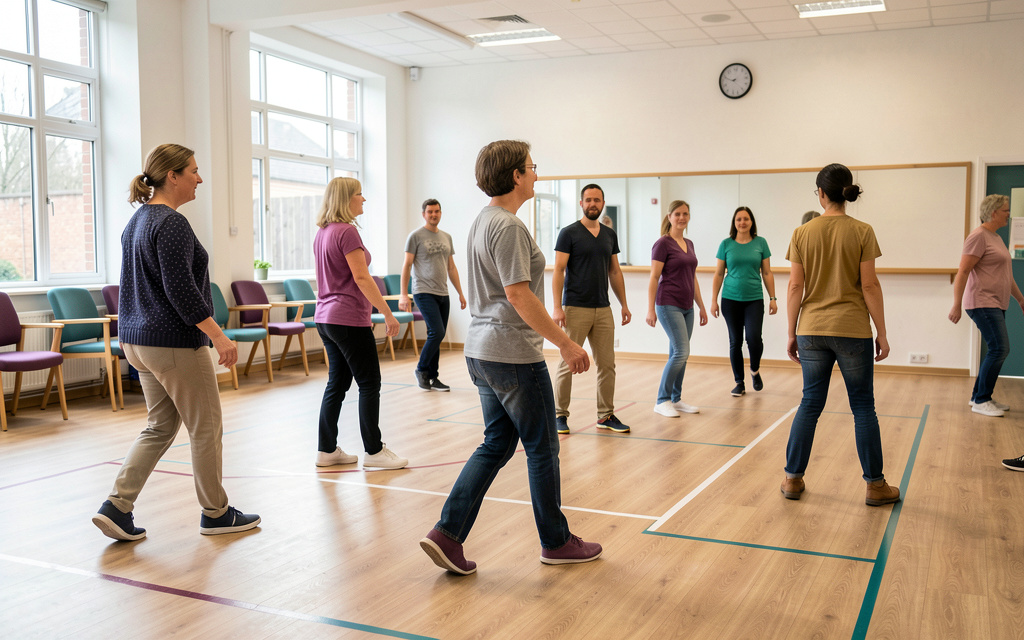
03Build movement families in a useful order.
 04
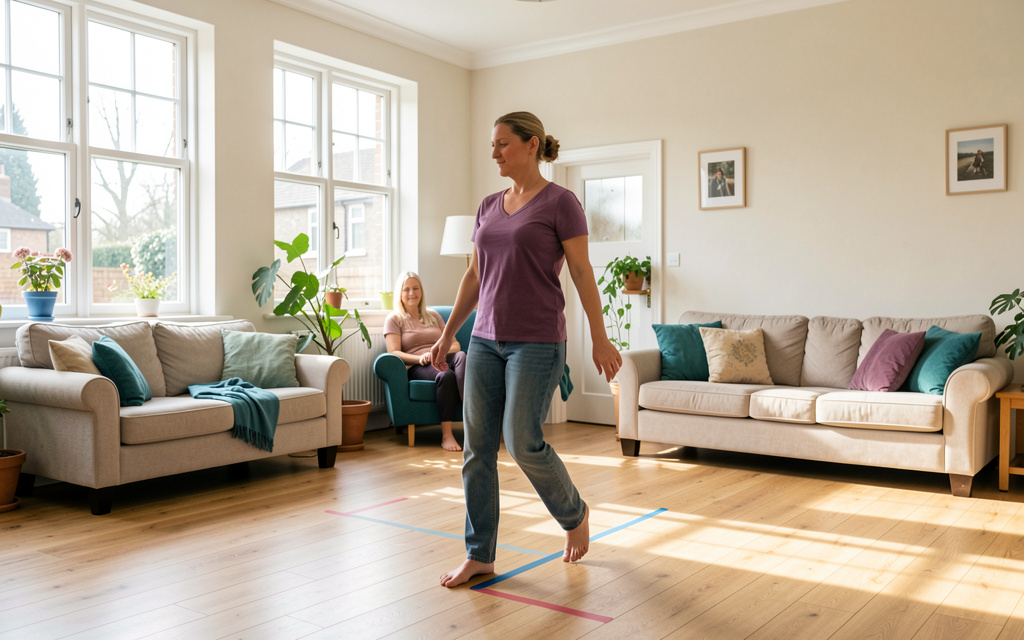
04Make a small clear session at home.
 05
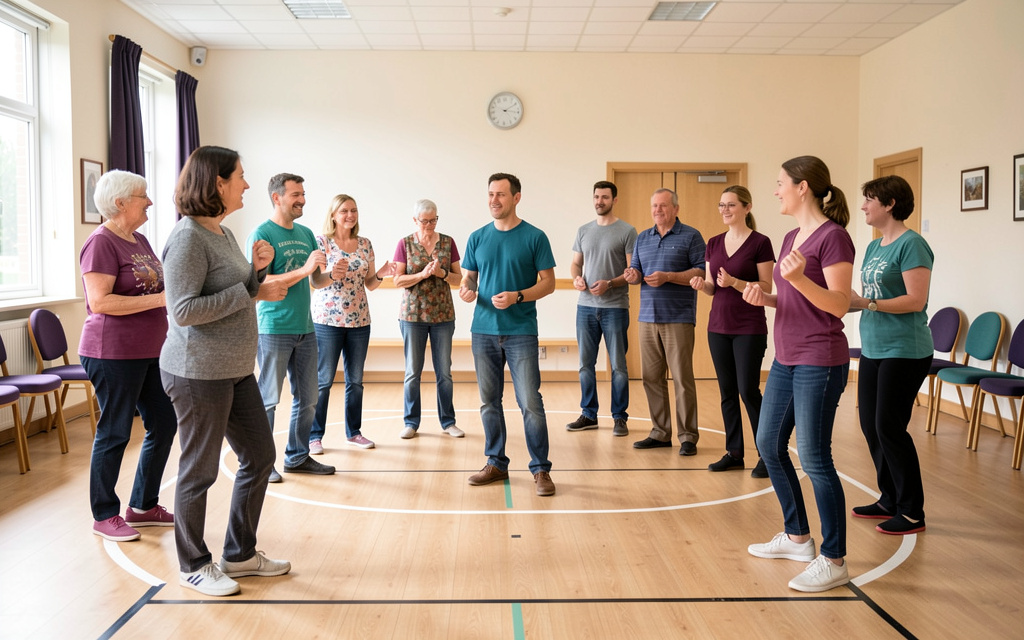
05Share a room with calm confidence.
 06
06Read the latest notes from the desk.
First ten minutes
See the room before you ask your feet to remember it.
Count an eight and point to the wall.
Find the free foot after every action.
First Counts Step Decoder
Twenty-four foundation terms, arranged as a progression rather than a glossary that leaves you alone.
Open the Step DecoderDecoder
| Term | Timing | Weight | Direction |
|---|---|---|---|
| Step touch | 1 + 1 | weight stays on the stepping foot | Side or forward |
| Heel dig | 1 | weight remains on the supporting foot | Forward diagonal |
| Toe touch | 1 | weight remains on the supporting foot | Forward, side or back |
| Stomp | 1 | usually takes weight | In place |
| Kick | 1 | weight remains on the supporting foot | Forward or diagonal |
| Hitch | 1 | weight remains on the supporting foot | Upward knee action |
| Grapevine / vine | 4 | changes each count | Sideways |
| Shuffle | 1&2 | changes through three quick actions | Forward, back or sideways |
Every row is a reading aid, not choreography. Open the movement ladder to choose what to learn next.
Dated journal
Journal
Build a line dance sequence in layers: the rough pass of counts comes first, the count fixes the shape, and detail comes last because early detail is what gets
Journal
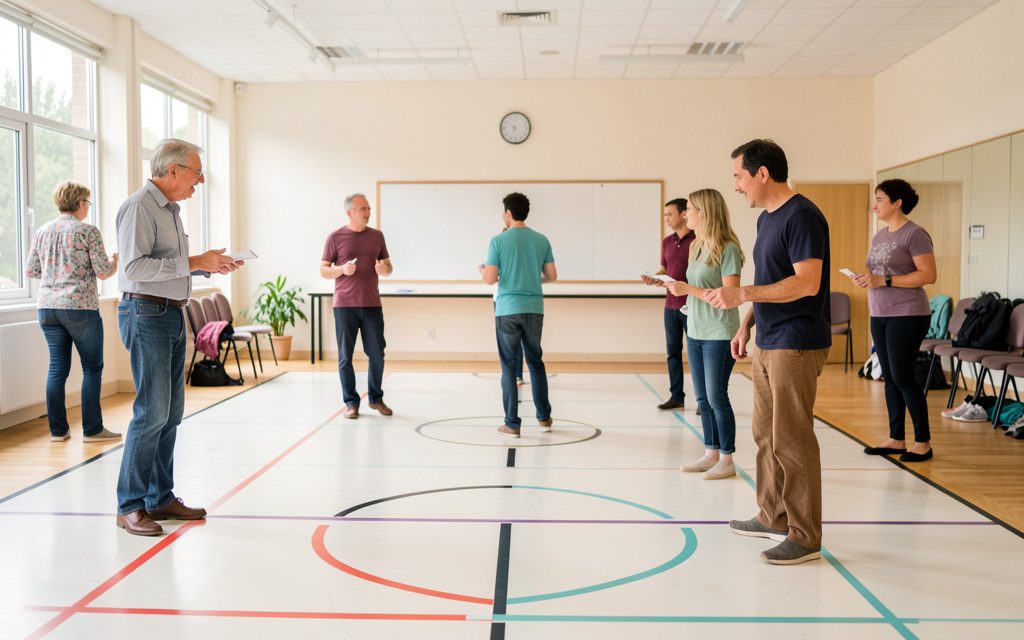
How to pick a line dance for a room you have not seen, and why the teacher who works that floor every week reads it better than any general list.
Journal
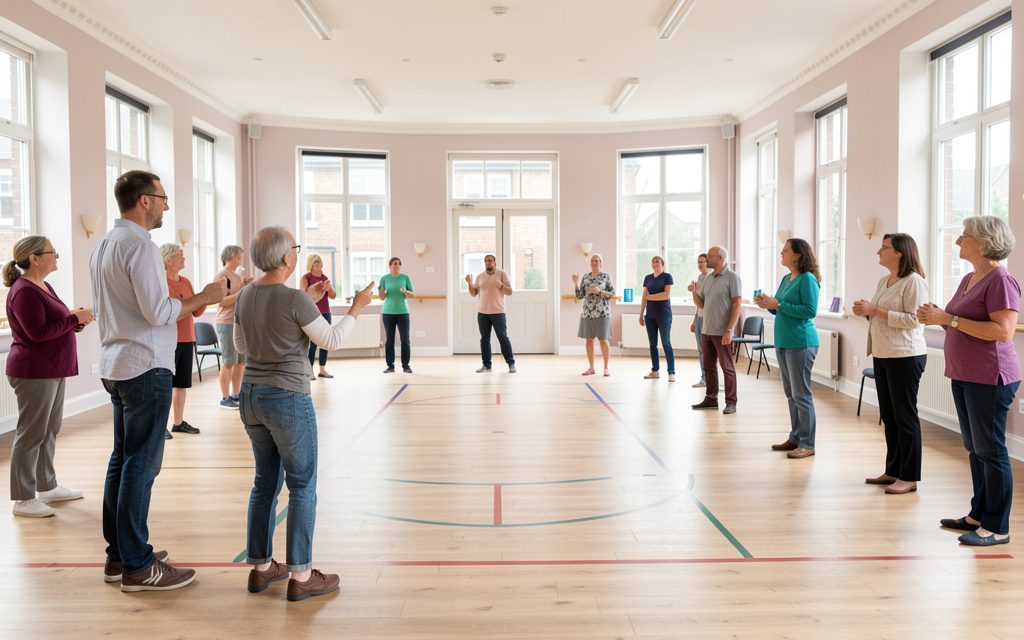
How a line dance class is organised into a term, what the first weeks ask of a newcomer, and whether to join at the start or in the middle.
Journal
How a room knows what comes next, and why a call, a cue and a sounded signal do different jobs on a crowded floor.
Journal
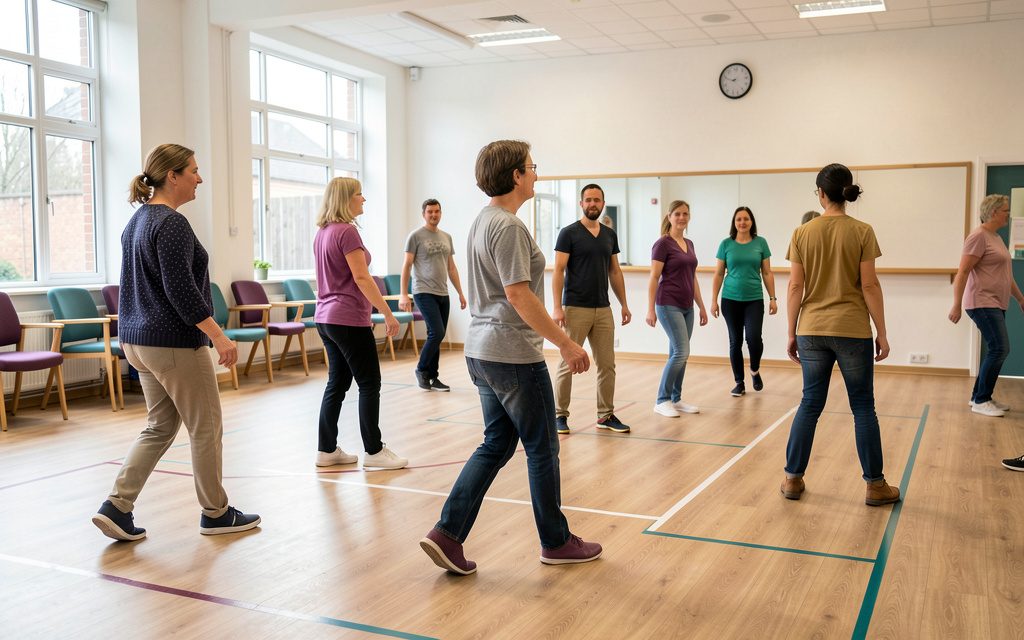
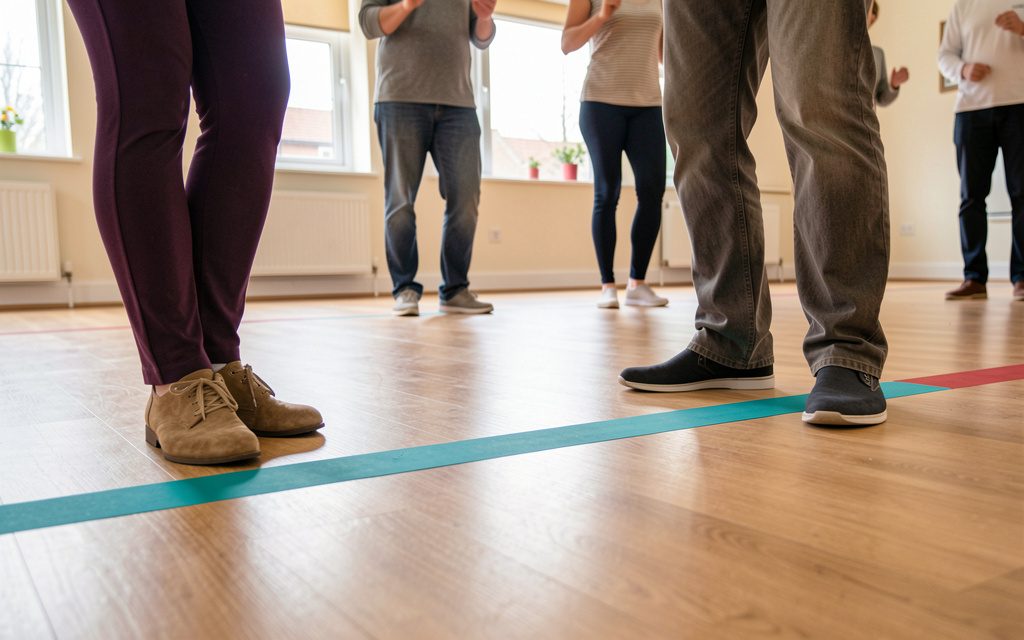
Why dance steps come in families, how a named family helps you learn a new step, and what happens when two teachers use different names for one action.
Journal
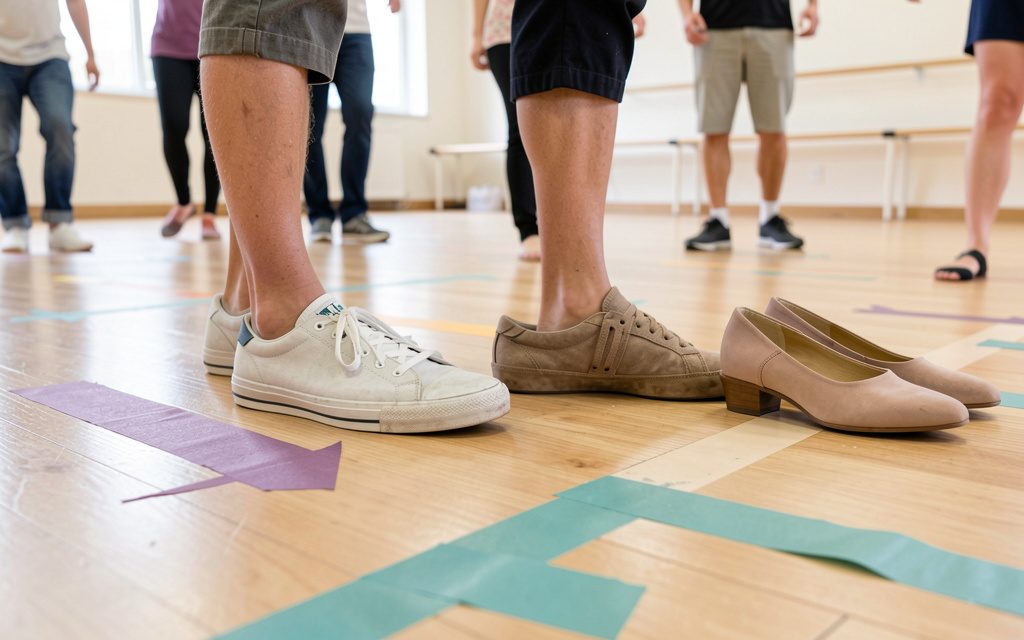
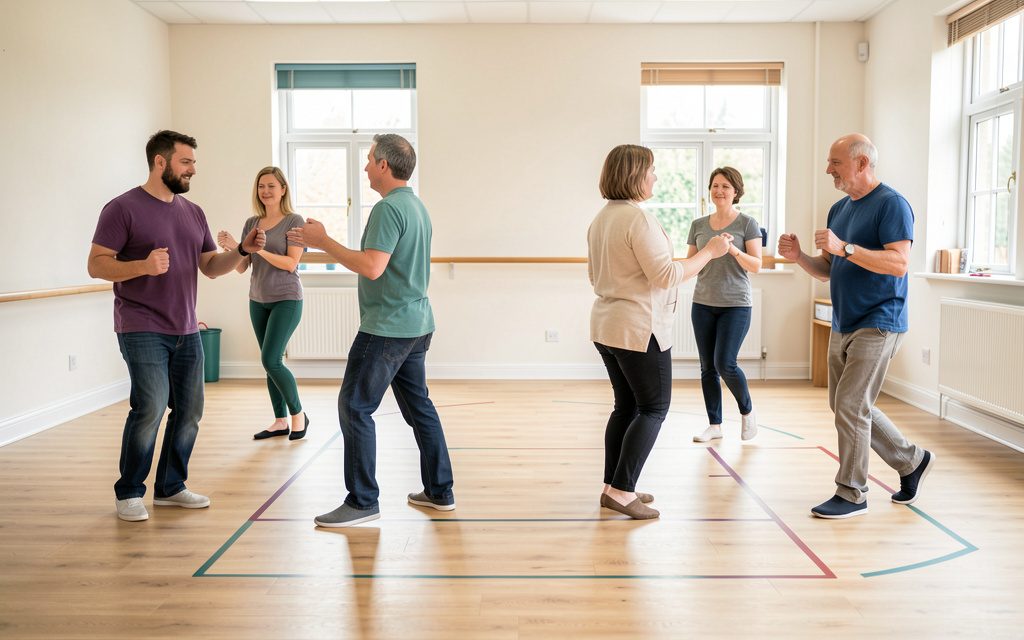
Why laces come undone while dancing, and how to tie back chairs and run a cable flat in a hired room without damaging the fittings.
Journal
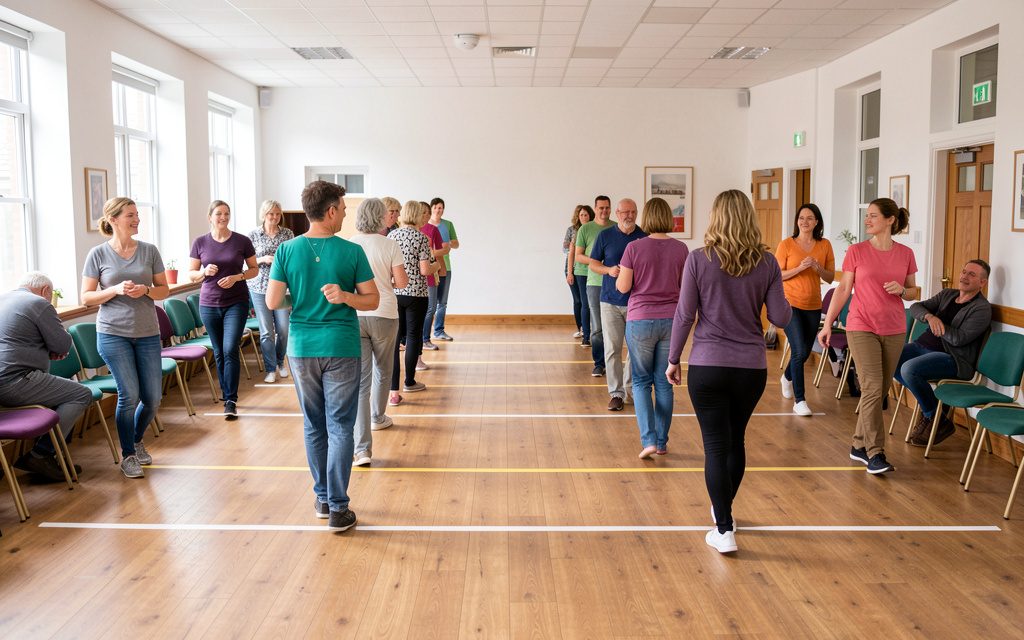
How adults learn a new movement skill without pressure, what progress looks like in the first months, and why breathing matters more than speed.
Journal
A calm routine for leaving a hired hall: arrival, parking, neighbours and the last ten minutes, so caretakers remember your group kindly.
How we work We compare published level guidance and established terminology sources, then write original, practical explanations. Read the method and sources.
The reference shelf
Each guide here is reread against its sources whenever terminology or level guidance shifts, and it keeps its place whatever the journal notes next.
Core Steps
The vine most beginners meet first, walked count by count so the last step stays your own choice.
Learn the Language
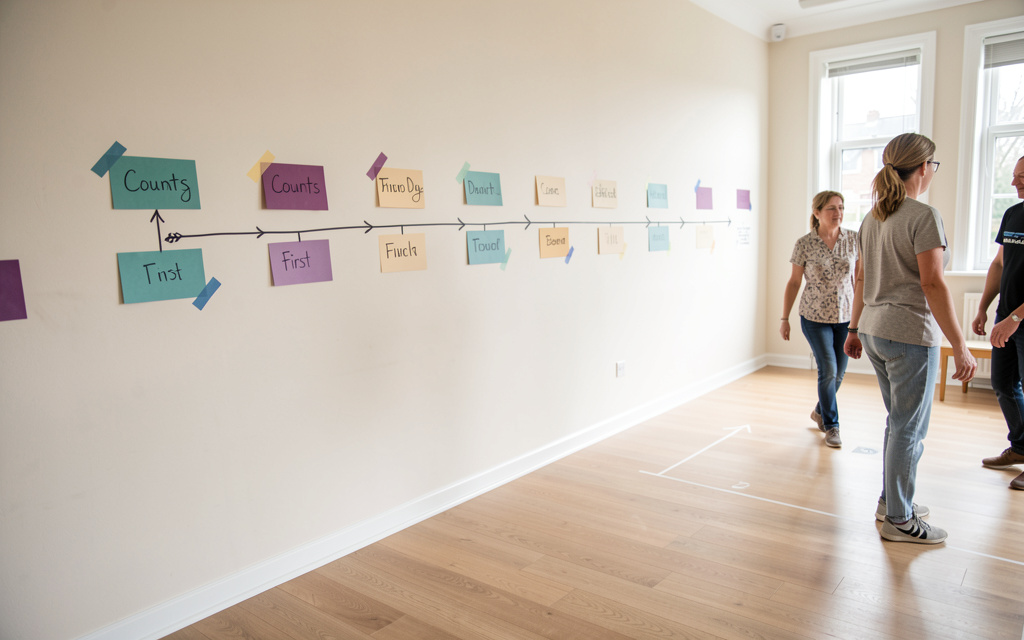
Where tags and restarts sit on the wall, and how to mark both before the music starts.
Practice
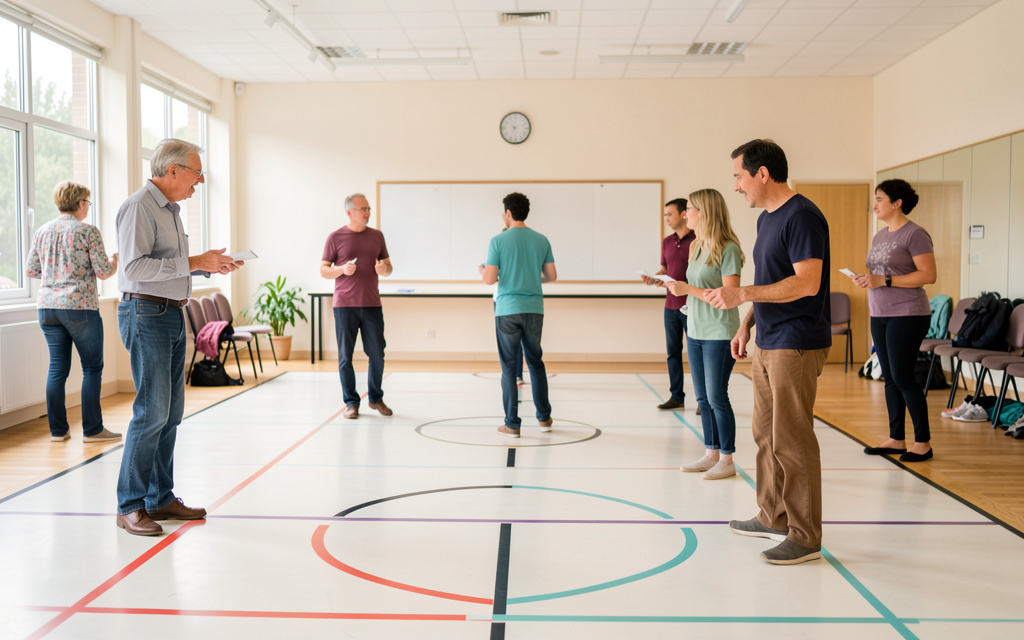
A structure checklist that judges a first dance by turn load and teaching support, not its name.
Floorcraft
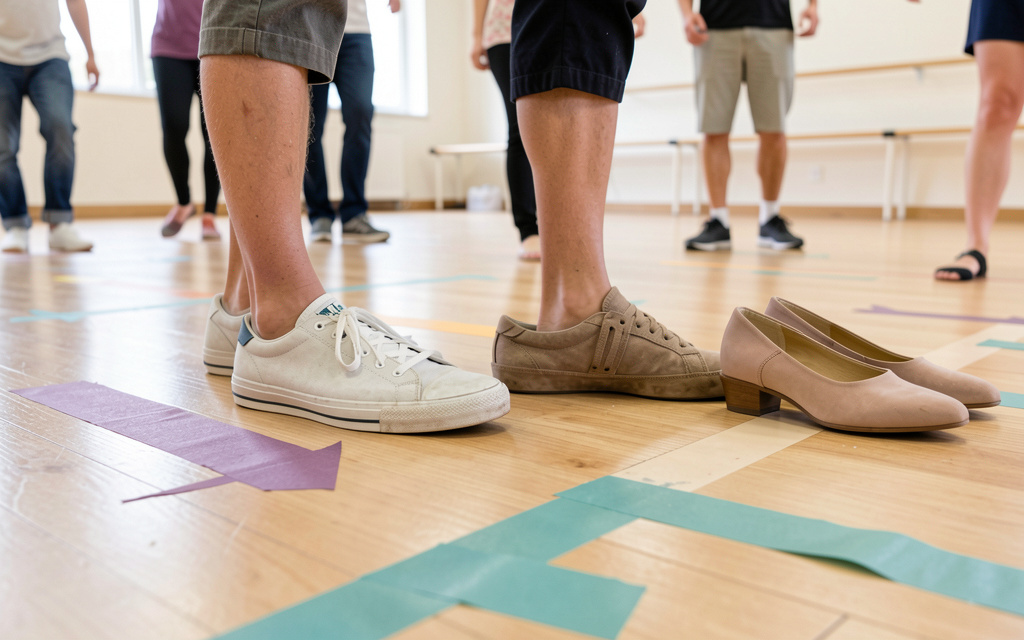
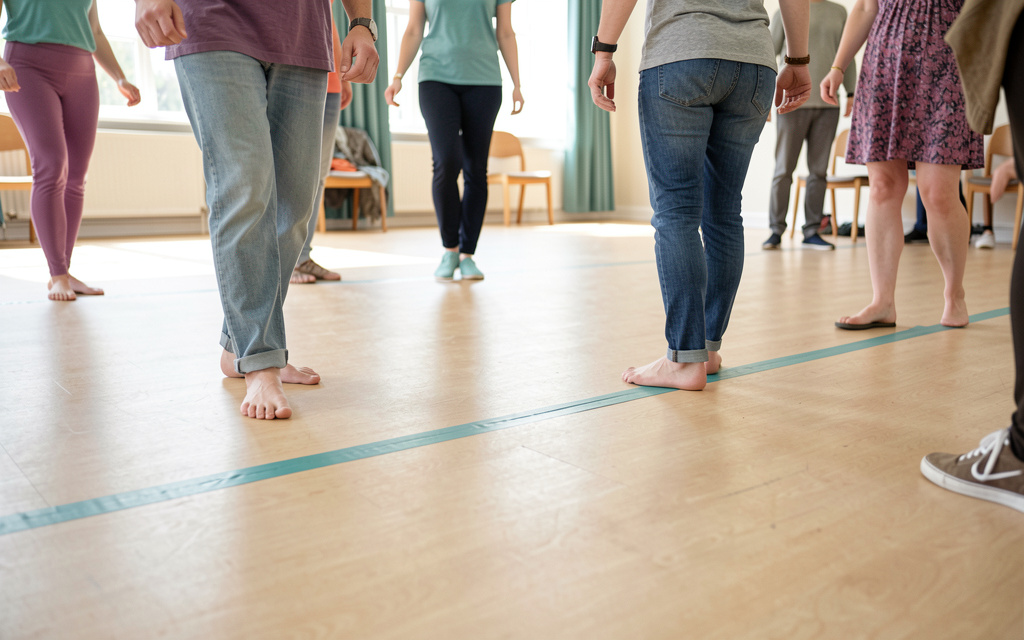
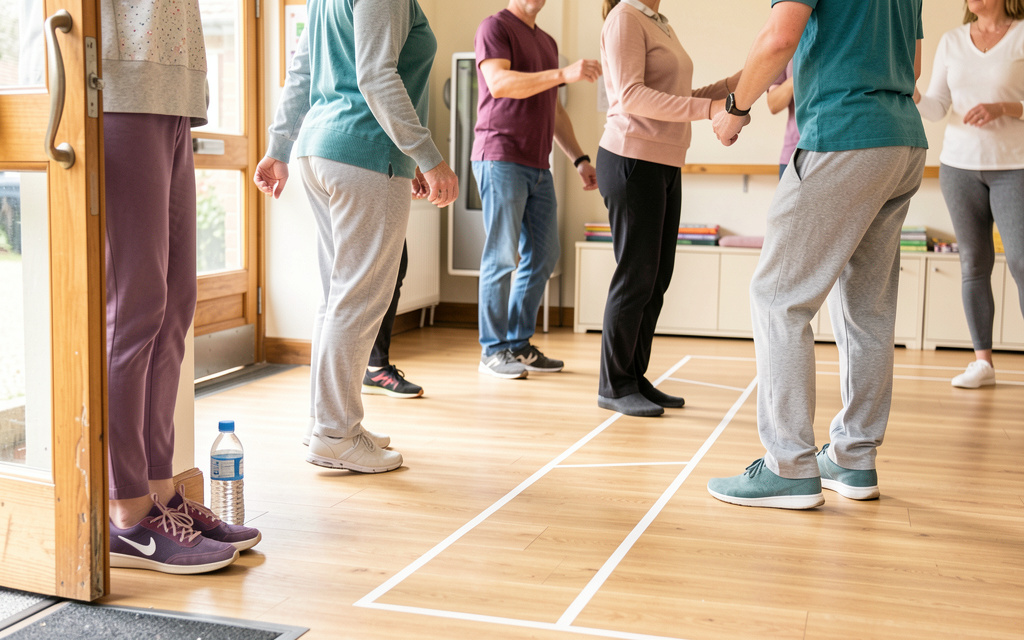
Comfortable clothing and floor friendly footwear for a calm first class.
Off the floor When the count rests between sessions, the desk keeps a handful of slower reads open: dated knitting and crochet how-tos, dyed cloth and wearable art, typing practice for comfortable speed, surf lessons and ocean knowledge, reading on craft beer culture and a wooden surf plug field guide.
Painted studies For the quiet hours between classes the desk keeps a watercolor magazine open: how to lay a watercolor wash.
Race photography The desk also follows a Manx road-racing journal, whose notes on the snaefell mountain course length read the circuit turn by turn.
Start here A newcomer who wants to begin can follow the route to start line dancing, which sets out the first steps before joining a local class or club.