01
Notice the pattern
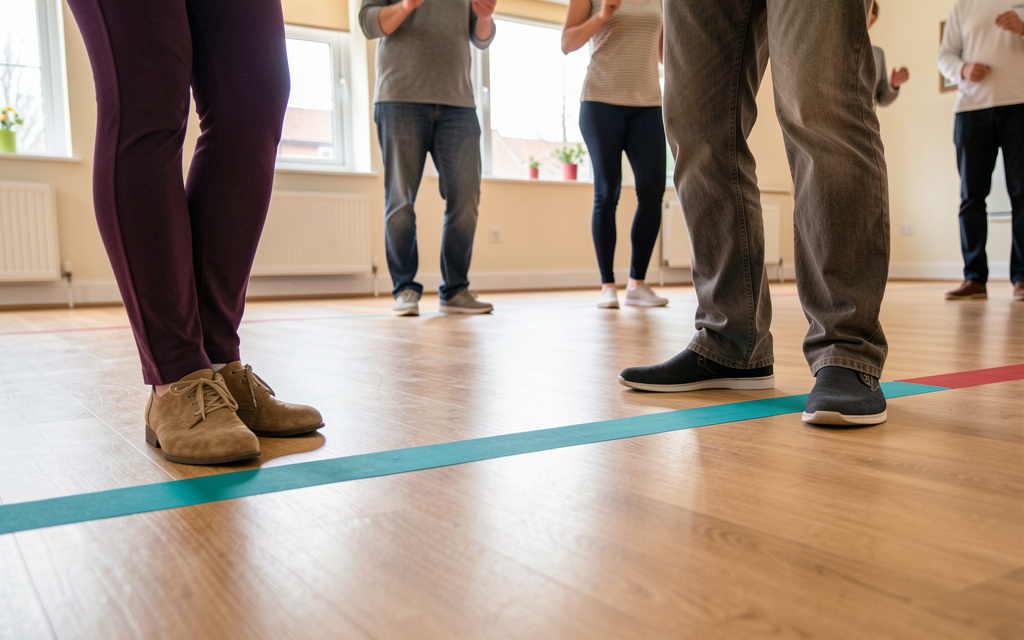
Weight is the detail behind many missed next steps. A foot can touch a place without becoming the foot that supports you. That is why the useful question is not whether you look like everyone else. It is whether you can describe the next action in a way that lets you repeat it. A step sheet may use a compact token, while a teacher may use a spoken cue. The Step Decoder keeps both close to the physical action.
02
Try one clean version
After each count, quietly ask: which foot could move now? Begin at a pace that allows you to hear your own count. Keep enough clear space to stop, reset and begin again. If a local instructor gives a different convention, their room-specific direction wins for that class.
03
Check the next foot
Before moving on, pause and identify your facing direction, supporting foot and next count. This is a better self-check than rushing through a longer sequence. It also makes the weight-transfer guide useful even when the term first feels technical.
For a first class, pair this page with what to expect in the room. For home practice, use the four-week practice route to keep the next decision manageable.
Weight awareness is also the skill that changes most when a dancer stops dancing alone. The desk keeps a guide on what changes when you share a frame for the moment a solo count becomes a conversation between two people.
Weight transfer depends on the foot arriving flat and staying flat, and that is hard when a shoe shifts inside itself. Before a class, check the heel grip and the knot tension, because a loose lace lets the foot slide on the ball and the count lands late. Retie once, firmly, and test with two small steps and a turn. Dancers who want a longer look at footwear and floor details can read about laces that stay tied on the floorcraft page. The aim is simple: the shoe moves with the foot, so the weight can pass from one foot to the other without a pause.Sources and scope
Source note: terminology and level guidance are compared with Linedancer, CLDAA, Kickish and canonical step-sheet metadata. Wording here is an original explanation.
Last reviewed 23 August 2026. Read the full method and sources, or email a terminology correction to [email protected].