01
Notice the pattern
A good first choice has a readable level, a modest turn load and enough teaching support to let you pause and check. That is why the useful question is not whether you look like everyone else. It is whether you can describe the next action in a way that lets you repeat it. A step sheet may use a compact token, while a teacher may use a spoken cue. The Step Decoder keeps both close to the physical action.
02
Try one clean version
Use the checklist before you commit to a title or a recording. Begin at a pace that allows you to hear your own count. Keep enough clear space to stop, reset and begin again. If a local instructor gives a different convention, their room-specific direction wins for that class.
Checklist
Choose by structure
- Does the listed level give you room to think?
- Can you see the count and wall information?
- Is the turn load clear and modest for you?
- Are tags or restarts named before you begin?
- Is there a reputable teaching resource you can pause?
A familiar song is not automatically a manageable learning choice. Structure is the better first filter.
03
Check the next foot
Before moving on, pause and identify your facing direction, supporting foot and next count. This is a better self-check than rushing through a longer sequence. It also makes the weight-transfer guide useful even when the term first feels technical.
For a first class, pair this page with what to expect in the room. For home practice, use the four-week practice route to keep the next decision manageable.
Structure is a fair filter for a first partner dance as well. If this checklist leaves you curious about dancing with someone rather than beside them, the desk has a separate guide on moving from line dance to a shared frame.
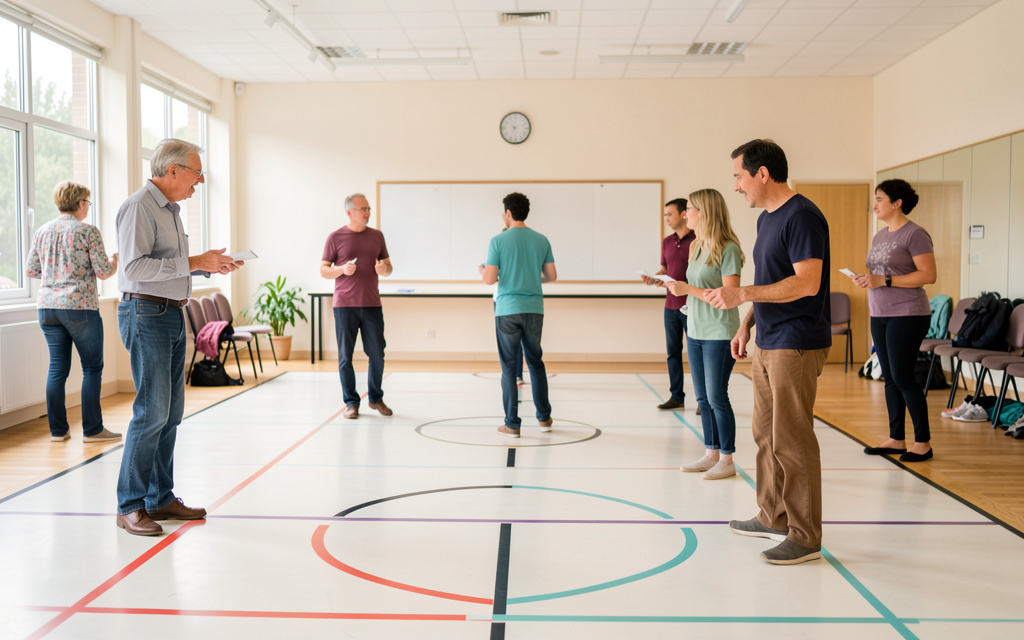
A first dance often works better when it suits the room as well as the feet. Floor size, surface and the number of people on it all shape how a simple walkthrough feels, so a dance that fills a large hall can crowd a small one. Before you settle on a first dance, it helps to check how the steps sit in the space you actually use. The practice page on matching a dance to the room sets out what to look at, and you can open it there. Read it once, then pick a dance that leaves everyone room to move.If you are choosing a first line dance as an adult, the figures matter less than the pace at which you meet them. A dance with four or five repeated steps gives you time to hear the count, place your weight and finish each wall without rushing. Dances that change direction every few counts can wait. The aim is a first dance you can walk through slowly and still enjoy at the end of an evening. Adults often learn best by learning one figure at a time, so pick a dance that lets you do exactly that.Sources and scope
Source note: terminology and level guidance are compared with Linedancer, CLDAA, Kickish and canonical step-sheet metadata. Wording here is an original explanation.
Last reviewed 23 August 2026. Read the full method and sources, or email a terminology correction to [email protected].