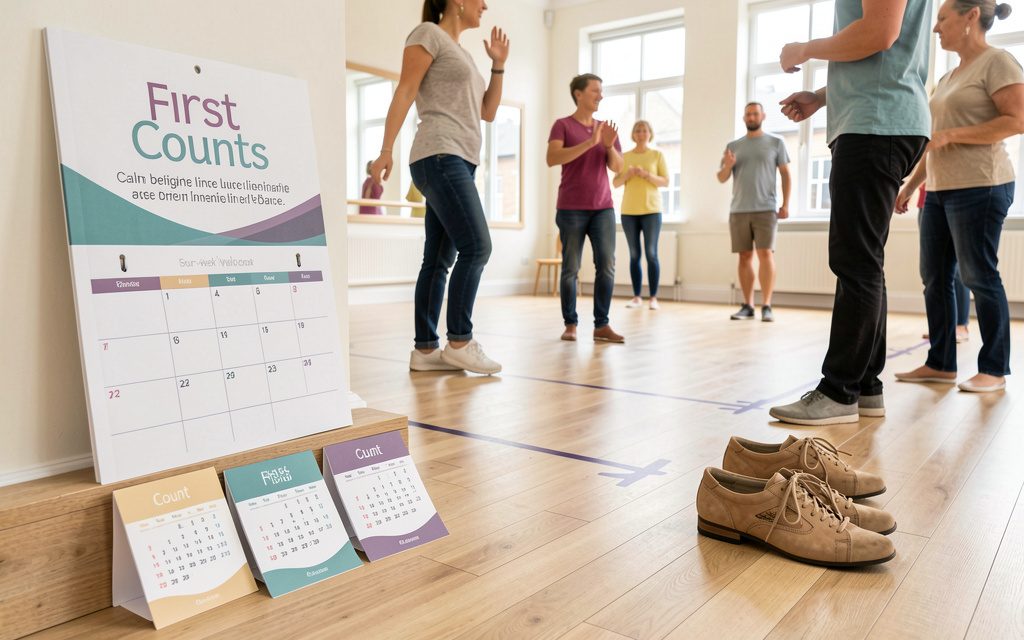
A line dance group may put gaffer tape, also called cloth or matte paper tape, on a hired hall floor. It is the usual choice because it peels up cleanly from sealed wood, vinyl and sports surfaces, and it holds long enough for a session. Masking tape is a second option for very short use, and PVC electrical tape is best avoided on any floor a shoe has to pivot on.
The decision is not really about the dance. It is about a thin adhesive film on a hard surface, and that behaves much the same whether it is wrapped around a shaft or laid on a floor, which is why the notes on how vinyl film is applied are a fair comparison for a hall committee. The film, the adhesive and the way heat releases both are the same family of questions.
Which tape can a line dance group put on a hall floor?
Gaffer tape is the default answer. It is a cloth or paper-backed tape with a rubber or acrylic adhesive, usually 48 mm to 50 mm wide, and it is designed to be removed within days rather than months. On a sealed wooden floor, a vinyl sports floor or a painted concrete floor it grips well and lifts without taking the finish with it.
Masking tape works for a single evening. It is thinner, it tears by hand and it leaves less residue, but it also lifts at the edges once a shoe drags across it. If the group only needs a line for one class, masking tape is enough. If the tape has to survive a full day of workshops, gaffer tape is the safer choice.
PVC electrical tape and duct tape are the two to leave in the bag. Electrical tape is thin and stretches under a turning shoe, so it rolls into a string and catches the sole. Duct tape is strong but its adhesive is aggressive, and on a varnished floor it can pull the finish when it comes up. Neither is worth the risk in a hall the group wants to hire again.
A hall committee will also ask about colour. Black gaffer tape disappears against a dark floor and is less distracting for dancers. White or yellow tape is easier to see when the group is marking a start wall or a corner. Some halls ask for a specific colour to match their floor, and it is worth asking before the first session rather than after.
What does the hall committee usually ask?
Committees ask four things in practice. What tape will be used, how long it will stay down, who removes it, and what happens if a mark is left. A group that answers all four before the first booking is treated differently from one that arrives with a roll and no plan.
The most common condition is a time limit. Many halls allow tape for the duration of the booking only, with removal at the end of the session. Some allow it to stay for a weekend course. Very few allow it to stay for a week, because adhesive cures and the longer it sits, the harder it lifts.
The second condition is a test patch. A committee may ask the group to tape a small area in a corner, leave it for an hour, lift it and show the floor underneath. This is a reasonable request and it takes ten minutes. It also protects the group, because it shows whether the floor finish is sound before a full line is laid.
The third condition is insurance or a deposit. Some halls hold a small deposit against floor damage. A group that has done a test patch and can describe its removal routine usually avoids this.
How does tape behave under a turning shoe?
A turning shoe puts two forces on tape: downward pressure and sideways shear. The downward pressure is not the problem. The shear is. When a dancer pivots on the ball of the foot, the sole drags across the tape and tries to roll the edge.
Gaffer tape resists this better than masking tape because its cloth backing stretches slightly and spreads the load. A 0.2 mm to 0.25 mm cloth tape holds its edge through a pivot. A 0.1 mm paper tape does not, and after twenty minutes of turns the corners lift and curl.
Thickness matters more than width. A tape that is too thick, above about 0.3 mm, creates a ridge under the shoe and the dancer feels it on every step. A tape that is too thin, below about 0.1 mm, tears at the edge. The useful band for a dance floor is roughly 0.15 mm to 0.25 mm, which is the range most gaffer tapes sit in.
The surface matters too. On a sealed floor the adhesive grips the finish and the tape moves as one piece with it. On an unsealed or waxed floor the tape grips the wax, and when it lifts it takes the wax with it. That is not damage to the floor, but it looks like a mark and it needs a buff afterwards.
How do you remove floor tape without damaging the floor?
Removal is slower than laying, and it should be. The routine is warm, slow and low.
Warm the tape first. A hair dryer on a low setting, held about 15 cm from the surface, softens the adhesive in a few seconds. Heat is the single most useful tool here, and it is the same principle that governs how vinyl film is applied and released on any hard surface. Work along the tape in sections of about 30 cm rather than trying to lift a full line at once.
Peel at a low angle. Pull the tape back on itself, close to the floor, at roughly 15 to 20 degrees. A high angle pulls straight up and takes the finish with it. A low angle shears the adhesive away from the surface.
Go slowly. A steady pull of a few centimetres per second is right. A fast pull generates heat through friction and can leave adhesive behind, and it also risks a sudden release that snaps the tape and marks the floor.
Deal with residue immediately. If a sticky line remains, a small amount of isopropyl alcohol on a cloth, or a purpose-made adhesive remover, lifts it without attacking a sealed finish. Test on a hidden corner first. Do not use white spirit or acetone on a varnished floor.
Finish with a dry cloth and, if the hall asks, a light buff. The floor should look as it did before the session. A group that leaves the floor clean is a group that gets the same booking next term.
What does the tape leave behind?
Gaffer tape lifted within a day usually leaves nothing on a sealed floor. Lifted after a week it can leave a faint adhesive line, which is why halls set time limits. Masking tape leaves more residue than gaffer tape because its adhesive is softer, but the residue is easier to remove.
On an unsealed floor the tape can lift a thin layer of wax or finish. This is a surface mark rather than structural damage, and a buff with a floor pad restores it. On a damaged or flaking finish, no tape is safe, and the group should tell the committee before laying anything.
A test patch answers most of these questions in advance. Tape a 30 cm strip in a corner, leave it for the length of a normal session, warm it, peel it low and slow, and look at the floor. If the floor is unchanged, the group has its answer and the committee has its evidence.
A short routine for the end of the night
Warm each strip with a hair dryer, peel it low and slow, bag the tape rather than leaving it in a pile, check the floor under a light, and wipe any residue with isopropyl alcohol on a cloth. Ten minutes at the end of a session protects the booking and the floor. The same care that keeps a thin film flat and clean on a hard surface keeps a hall floor fit for the next group.
01
Notice the pattern
A line dance group may put gaffer tape, also called cloth or matte paper tape, on a hired hall floor. That is why the useful question is not whether you look like everyone else. It is whether you can describe the next action in a way that lets you repeat it. A step sheet may use a compact token, while a teacher may use a spoken cue. The Step Decoder keeps both close to the physical action.
02
Try one clean version
It is the usual choice because it peels up cleanly from sealed wood, vinyl and sports surfaces, and it holds long enough for a session. Begin at a pace that allows you to hear your own count. Keep enough clear space to stop, reset and begin again. If a local instructor gives a different convention, their room-specific direction wins for that class.
03
Check the next foot
Before moving on, pause and identify your facing direction, supporting foot and next count. This is a better self-check than rushing through a longer sequence. It also makes the weight-transfer guide useful even when the term first feels technical.
For a first class, pair this page with what to expect in the room. For home practice, use the four-week practice route to keep the next decision manageable.
Source consulted for this note: hse.gov.uk.
Tape marks the edges of a practice space, and it also changes how dancers read the room. A straight line of tape gives everyone a clear boundary for turns and travelling steps, so beginners know where to stop without watching their feet. Before the first count, walk the taped area once and check the gaps between lines, the space behind each row and the distance to the walls. That habit of reading the floor first carries into any hall, because tape is only a guide and the room itself sets the limits. Replace worn tape when it curls, and keep the lines visible from the back row.Sources and scope
Source note: terminology and level guidance are compared with Linedancer, CLDAA, Kickish and canonical step-sheet metadata. Wording here is an original explanation.
Last reviewed 16 September 2026. Read the full method and sources, or email a terminology correction to [email protected].