01
Notice the pattern
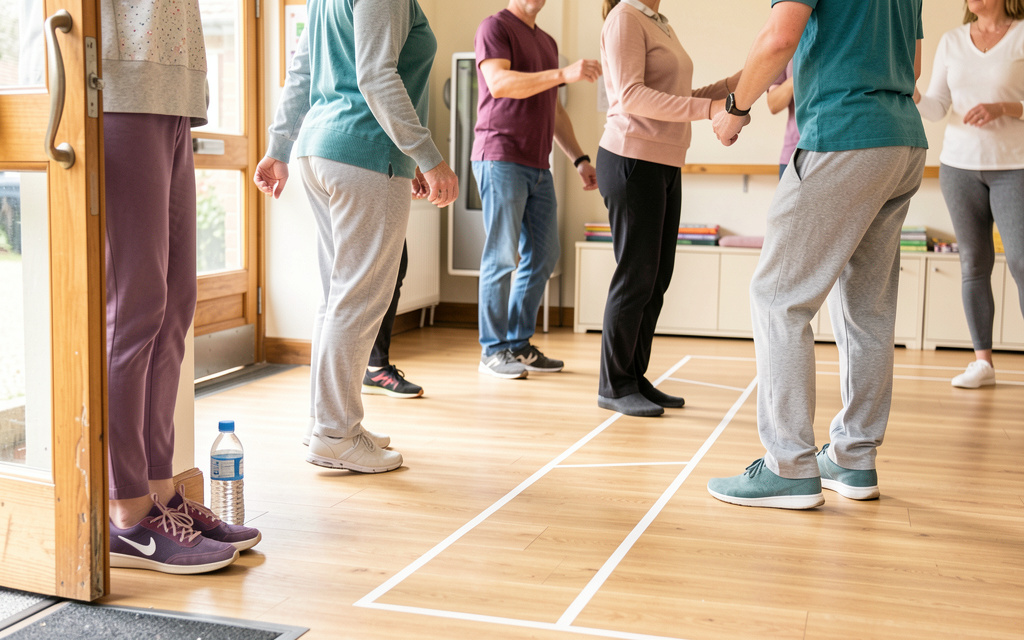
There is no costume requirement for learning. Clothing that lets you move and footwear suited to the venue are a sensible beginning. That is why the useful question is not whether you look like everyone else. It is whether you can describe the next action in a way that lets you repeat it. A step sheet may use a compact token, while a teacher may use a spoken cue. The Step Decoder keeps both close to the physical action.
02
Try one clean version
Ask the organiser about the floor if you are unsure, and favour comfort over a themed purchase. Begin at a pace that allows you to hear your own count. Keep enough clear space to stop, reset and begin again. If a local instructor gives a different convention, their room-specific direction wins for that class.
03
Check the next foot
Before moving on, pause and identify your facing direction, supporting foot and next count. This is a better self-check than rushing through a longer sequence. It also makes the weight-transfer guide useful even when the term first feels technical.
For a first class, pair this page with what to expect in the room. For home practice, use the four-week practice route to keep the next decision manageable.
The same checks travel to a partner-dance floor. The Cincy Bop Bulletin keeps field notes on bop, swing and shag socials around Cincinnati: how to choose a first lesson, how to read a venue before you go, and which shoes and clothing keep a social evening comfortable.
Clothing is only half of the preparation. A class also asks you to think about the room itself, because the floor, the walls and the seating are shared with everyone else in the hall. Shoes that mark the floor, bags left in the walkway or chairs pushed out of place all affect the next group who use the space. The habit of arriving ready to help covers this: you come dressed for dancing and you leave the hall as you found it. That second page explains the small actions, such as stacking chairs and checking the floor, that keep a venue welcoming for the classes that follow yours.Shoes matter more than most beginners expect. Trainers with thick rubber soles grip the floor and make turns harder, while smooth soles let you pivot without straining a knee. Many classes ask for shoes worn only indoors, so keep a clean pair in your bag. If the hall has a wooden or vinyl surface, ask the teacher what works there before you buy anything. The page on footwear for a hall floor explains how sole type and floor surface affect your balance and turns.Sources and scope
Source note: terminology and level guidance are compared with Linedancer, CLDAA, Kickish and canonical step-sheet metadata. Wording here is an original explanation.
Last reviewed 23 August 2026. Read the full method and sources, or email a terminology correction to [email protected].