01
Notice the pattern
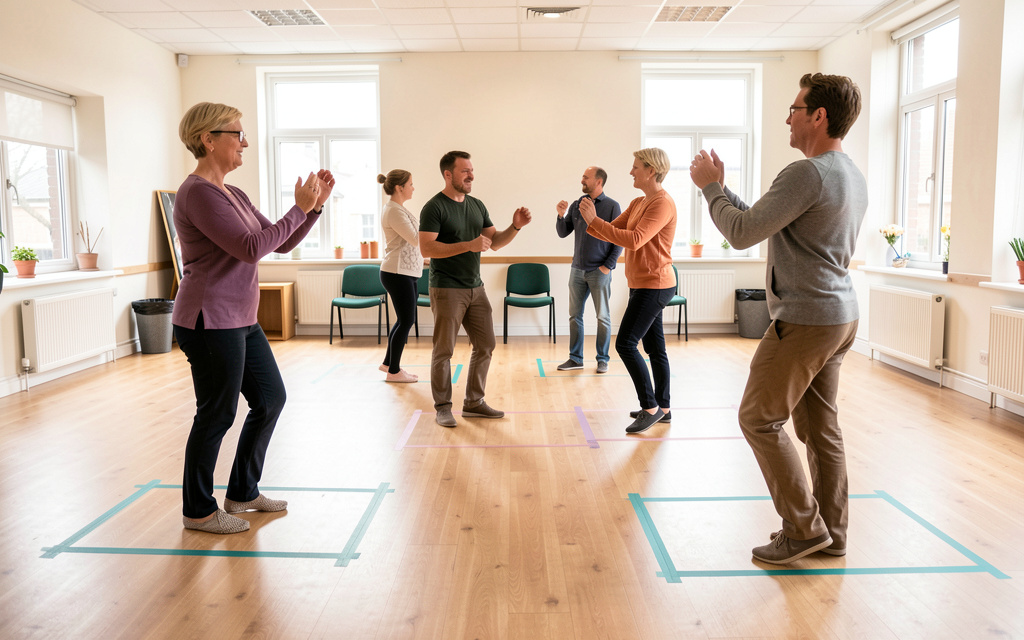
A jazz box traces a crossed pathway with four distinct weight changes. A turning version changes the facing, not the need for clear steps. That is why the useful question is not whether you look like everyone else. It is whether you can describe the next action in a way that lets you repeat it. A step sheet may use a compact token, while a teacher may use a spoken cue. The Step Decoder keeps both close to the physical action.
02
Try one clean version
Make the square visible in your mind, then add the turn only when the basic route feels calm. Begin at a pace that allows you to hear your own count. Keep enough clear space to stop, reset and begin again. If a local instructor gives a different convention, their room-specific direction wins for that class.
03
Check the next foot
Before moving on, pause and identify your facing direction, supporting foot and next count. This is a better self-check than rushing through a longer sequence. It also makes the weight-transfer guide useful even when the term first feels technical.
For a first class, pair this page with what to expect in the room. For home practice, use the four-week practice route to keep the next decision manageable.
The jazz box turns on a simple pattern of four steps, and it often sits inside a longer sequence where the next figure depends on where the feet land. When a dancer loses the timing, the box can become a figure that blocks a sequence, because the weight changes arrive in the wrong order and the following count has no clear starting point. Practise the box alone until the crossing step and the turn feel automatic, then place it between two other figures and count aloud. The page on building a dance sequence in layers explains how to add figures one at a time in this way.Sources and scope
Source note: terminology and level guidance are compared with Linedancer, CLDAA, Kickish and canonical step-sheet metadata. Wording here is an original explanation.
Last reviewed 23 August 2026. Read the full method and sources, or email a terminology correction to [email protected].